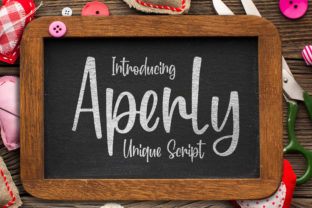
Aperly: A Playful Script Font for Crafters
As a maker who spends hours designing labels, stickers, and invitations, I know that choosing the right typeface is about more than just aesthetics. It is about communication, brand identity, and the emotional connection your product makes with a customer before they even touch it. When I first discovered Aperly, I was immediately drawn to its unique energy. It is not just another script; it is a playful, fashion-forward statement piece that brings a sense of modern whimsy to any project. For those of us running small shops or creating handmade goods, finding a font that balances personality with professional polish is rare. Aperly manages to strike that perfect chord, making it an essential addition to my digital toolkit.
The Visual Personality of Aperly
Aperly is described as a unique and exciting playful script, and that description holds true in practice. Visually, it possesses a bouncy, rhythmic quality that feels both spontaneous and deliberate. Unlike stiff, formal calligraphy that can sometimes feel distant or overly traditional, Aperly feels approachable and fresh. It has the charm of a handwritten note but the consistency required for professional packaging design and brand identity. The strokes are fluid, suggesting movement and creativity, which aligns perfectly with the ethos of the handmade community. Whether you are designing for a boutique clothing line or a cozy candle shop, this typeface injects a dose of personality that static fonts simply cannot match.
Practical Applications for Handmade Products
The versatility of Aperly shines when applied to physical products. As a seller of printable products and physical goods, I look for fonts that perform well across various mediums. Here is how I integrate this script font into my workflow:
- Product Labels and Packaging: For items like soy candles, artisan soaps, or homemade jams, Aperly works beautifully for the product name or key descriptors. Its playful nature softens the look of minimalist packaging, making it feel inviting rather than sterile.
- Stickers and Decals: When creating kiss-cut stickers for planners or laptops, the bold strokes of Aperly remain visible even at smaller sizes. It is ideal for short, punchy phrases like "Good Vibes" or "Hello."
- Wedding and Event Stationery: While it is playful, it retains enough elegance for casual weddings or baby showers. I have used it for welcome signs, menu headers, and place cards where a touch of fun is desired over strict formality.
- Apparel and Tote Bags: When working with heat transfer vinyl (HTV) or sublimation, Aperly’s connected letters create a seamless look on t-shirts and tote bags. It is particularly effective for boutique branding or team shirts.
- Digital Printables: For planners, greeting cards, and wall art, this display font serves as an excellent focal point. It draws the eye immediately, allowing you to build the rest of the design around it.
Readability and Production Tips
One of the biggest challenges with handwritten fonts is readability. A beautiful font is useless if customers cannot decipher what it says. Aperly is designed with clarity in mind, but there are best practices to ensure your designs remain legible. Because it is a decorative script, it is best suited for short phrases, titles, names, and single words. Avoid using it for long paragraphs or fine print, such as ingredient lists or legal disclaimers. Instead, pair it with a clean, simple font for body text.
For those using cutting machines like Cricut or Silhouette, Aperly performs well, but attention to detail is key. When cutting intricate scripts, ensure your material settings are precise to avoid tearing the delicate connections between letters. If you are weeding vinyl, take your time with the inner counters of letters like 'e' and 'a'. For printed products, always test a physical proof. Colors and paper textures can affect how the ink settles, so checking a mockup or a sample print ensures the weight of the font looks balanced on your specific medium.
Strategic Font Pairing for Brand Consistency
To maximize the impact of Aperly, thoughtful font pairing is essential. Since Aperly is expressive and busy, it needs a calm partner. I frequently pair it with a geometric sans serif font for a modern, clean contrast. This combination works exceptionally well for logo design and social media graphics, where the script provides the emotion and the sans serif provides the information. Alternatively, pairing it with a classic serif font can create a sophisticated, editorial look suitable for high-end boutique tags or wedding invitations. The key is to let Aperly be the star while the secondary font supports it without competing for attention.
Technical Features and File Formats
When investing in a premium font like Aperly, it is important to check the included technical features. Many modern scripts come with alternates, ligatures, and swashes that allow you to customize the look of your text. These features prevent your designs from looking repetitive, especially if you are using the same font across multiple products. Check if Aperly includes multilingual support if you plan to sell internationally or create designs in different languages. Additionally, ensure you have access to the necessary file formats, such as OTF, TTF, and potentially web fonts, depending on whether you are creating physical goods or web design assets. Having these formats ensures compatibility with design software like Adobe Illustrator, Photoshop, Canva, and Procreate.
Licensing for Commercial Use
For small business owners and crafters, understanding licensing is non-negotiable. Before using Aperly in any product you intend to sell, review the license agreement carefully. Most commercial fonts allow for use in physical products, such as printed mugs, shirts, and invitations, as well as digital downloads like SVG files and printable art. However, restrictions may apply to embedding the font in software or reselling the font file itself. Always verify if the license covers the volume of sales you anticipate. Using properly licensed commercial fonts protects your business and respects the work of the type designer. It is a small step that ensures your creative journey remains professional and sustainable.
Incorporating Aperly into your design arsenal can elevate your product presentation significantly. It offers a blend of fashion-forward style and practical usability that is hard to find. By using it strategically for labels, signs, and stationery, and pairing it with complementary typefaces, you can create a cohesive and appealing brand identity that resonates with your customers. Whether you are a seasoned designer or a hobbyist just starting out, this creative font provides the tools you need to make your handmade items stand out in a crowded marketplace.